
Skip to content
SOIL Institute of Management campus in Gurugram, Haryana
College profile

SOIL Institute of Management

Gurugram, Haryana · Established 2008 · Private / Deemed

About SOIL Institute of Management

### SOIL Institute of Management SOIL Institute of Management is a management education institution based in the Gurgaon-Manesar region of Haryana. Established in 2008, the institute was developed through collaboration between business leaders, professionals and social-sector organisations with an aim to create a different approach to management education. From its early years, SOIL has focused not only on business knowledge but also on developing responsible and purpose-driven professionals. The institute's learning philosophy gives importance to three broad areas: character, competence and enthusiasm. Students are encouraged to understand business concepts while also developing qualities such as ethical thinking, self-awareness, collaboration and social responsibility. This approach makes the learning experience more practical and connects classroom concepts with situations that students may encounter in their professional careers. SOIL has developed its academic offerings over the years, including management programmes such as the Post Graduate Diploma in Management (PGDM), Post Graduate Program in Management (PGPM) and PGPM in Human Resources. Its current PGDM is a two-year full-time programme based at the Manesar campus, while the PGPM and PGPM-HR are one-year full-time programmes offered in Gurgaon. A distinctive part of SOIL's academic environment is its emphasis on experiential learning. Activities such as case-based learning, industry interaction, leadership exercises, social initiatives, theatre, yoga and retreats are incorporated to help students look beyond conventional classroom education. The institute also highlights areas including sustainability, diversity, mindfulness, compassion and ethics as part of its overall educational approach. SOIL has also built academic and industry collaborations during its development, including partnerships with international institutions and organisations. Over time, the institute has expanded its programmes and introduced initiatives related to business design, leadership and social innovation. For students looking for management education with a combination of business skills, practical exposure and leadership development, SOIL Institute of Management offers an approach that goes beyond conventional management studies. Its focus on responsible leadership and experiential learning forms an important part of the institute's identity.

Popular courses

Accepted entrance exams

Approvals

  • as applicable
  • UGC / AICTE / Autonomous or university-recognized
IRMA campus in Anand, Gujarat

IRMA

Anand, Gujarat · Government / Public

Fees / year
₹9.89L
Avg package
₹15.00 LPA
Rating
5
Admissions
Open

### Institute of Rural Management Anand (IRMA) The Institute of Rural Management Anand (IRMA) is a well-known management institute in Anand, Gujarat, with a distinctive focus on rural management, social development and the changing needs of underserved communities. The institute was established with the vision of developing professionals who can combine management knowledge with a deeper understanding of rural and cooperative sectors. Over the years, IRMA has built a strong identity around management education that goes beyond conventional classroom learning. IRMA’s academic approach connects management concepts with practical experiences. Students are exposed to real-world situations through field-based learning, research activities and interaction with organisations working across rural and development sectors. This approach allows learners to understand how management decisions can influence communities, institutions, markets and livelihoods. The institute offers programmes in rural management at postgraduate, doctoral and executive levels. Its flagship management programme, earlier known as PGDM(RM), is now being offered as MBA(RM), while other academic options include the Fellow Programme in Management (Rural Management) and the executive programme in Rural Management. IRMA also conducts Management Development Programmes designed for professionals and organisations. A major part of IRMA’s identity comes from its association with Dr. Verghese Kurien and the cooperative movement in India. The institute continues to build on this legacy through its academic work, research and various centres focusing on areas such as sustainable livelihoods, social entrepreneurship, public policy, rural infrastructure, commodity markets and rural-urban dynamics. Along with academics, IRMA provides opportunities for research, fieldwork, industry interaction and professional development. Its campus infrastructure and learning environment are designed to support both classroom and experiential learning. For students interested in management with a focus on rural transformation, sustainability, development and social impact, IRMA provides an academic environment that combines management education with practical exposure and social-sector perspectives.

Admissions openView details
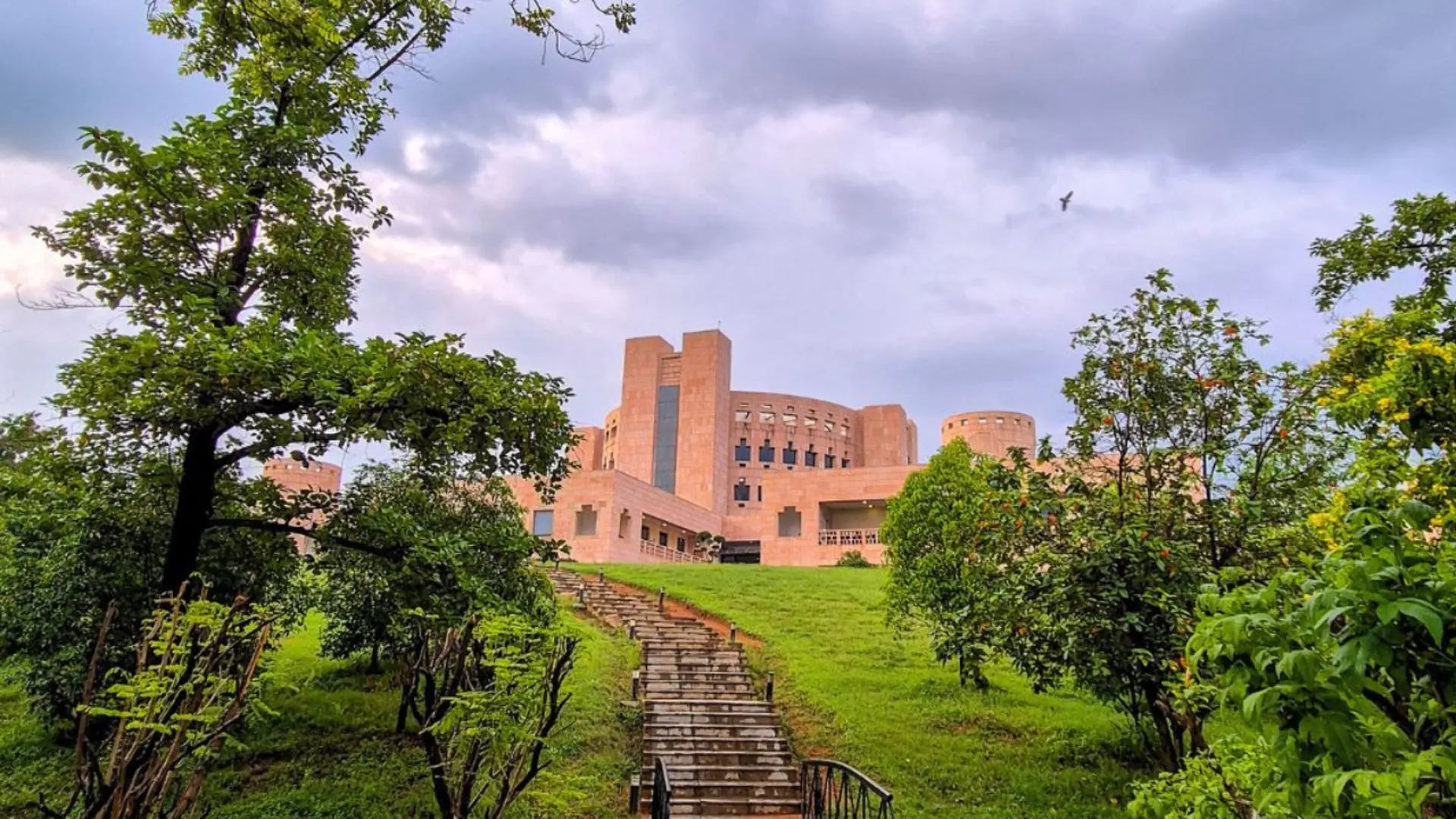
Indian School of Business (ISB), Hyderabad campus in Hyderabad, Telangana

Indian School of Business (ISB), Hyderabad

Hyderabad, Telangana · Private (Autonomous Business School)

Fees / year
₹20.00L
Avg package
₹30.00 LPA
Rating
4.8
Admissions
Open

Indian School of Business (ISB), Hyderabad is one of India’s most prestigious business schools, offering world-class management education with a strong global perspective. Established in 2001, ISB has rapidly gained international recognition for its innovative programs and high-quality faculty. The institute’s flagship program, the Post Graduate Programme in Management (PGP), is a one-year intensive course designed for professionals with prior work experience. The curriculum is aligned with global business standards and includes case studies, live projects, and leadership training. ISB collaborates with top international institutions such as the Wharton School, Kellogg School of Management, and London Business School. The campus in Hyderabad is equipped with cutting-edge infrastructure, including modern classrooms, research centers, hostels, and networking spaces. ISB emphasizes experiential learning and leadership development, preparing students for high-impact roles in the corporate world. One of the biggest strengths of ISB is its exceptional placement record. Graduates secure roles in top consulting firms, technology companies, investment banks, and multinational corporations, with some of the highest salary packages in India. With its global recognition, strong alumni network, and industry connections, ISB Hyderabad continues to be a top choice for professionals looking to accelerate their careers in management and leadership.

Admissions openView details
Maharaja Surajmal Institute campus in New Delhi, Delhi

Maharaja Surajmal Institute

New Delhi, Delhi · Private

Fees / year
₹1.68L
Avg package
₹5.00 LPA
Rating
4.8
Admissions
Open

### Maharaja Surajmal – His Life, Leadership and Legacy Maharaja Surajmal was an important ruler of the Bharatpur region and is remembered for his leadership, administrative understanding and ability to bring different communities together. He was born in 1707 and grew up during a politically changing period in North India. As the son of Badan Singh, he became closely involved in the affairs of the Bharatpur state from an early age and gradually emerged as one of its most influential leaders. One of the notable aspects of Maharaja Surajmal’s approach to governance was his emphasis on unity and practical administration. He worked with people belonging to different religious and social communities and is described by the institute as a ruler who respected different faiths. His administrative decisions were based more on ability and contribution than on social or religious background. He also supported the preservation of monuments associated with different communities, reflecting his broader approach towards cultural coexistence. Maharaja Surajmal was also closely connected with the concerns of farmers, who formed a major part of society at the time. He took an active interest in agricultural issues and introduced measures intended to address problems faced by cultivators. His understanding of the social and economic conditions of North India helped him build a strong administrative base. During his reign, the Bharatpur kingdom expanded considerably. His influence extended across several important areas of present-day Rajasthan, Uttar Pradesh, Haryana and the National Capital Region, including Agra, Aligarh, Mathura, Meerut, Rohtak, Gurgaon and other territories. Beyond military achievements, Maharaja Surajmal is remembered for diplomacy, political awareness and his efforts to maintain stability in a complex period of Indian history. He died on 25 December 1763 at Shahdara, Delhi. His legacy continues to be associated with leadership, social harmony, administrative vision and respect for humanity. The educational institution carrying his name, Maharaja Surajmal Institute in Janakpuri, Delhi, was established in 1999 and functions under the Surajmal Memorial Education Society. The institute's connection with his legacy reflects an emphasis on education, professional development and social values.

Admissions openView details

Planning to apply to SOIL Institute of Management?

Talk to a counsellor about eligibility, cutoffs, documents and deadlines before you apply.